
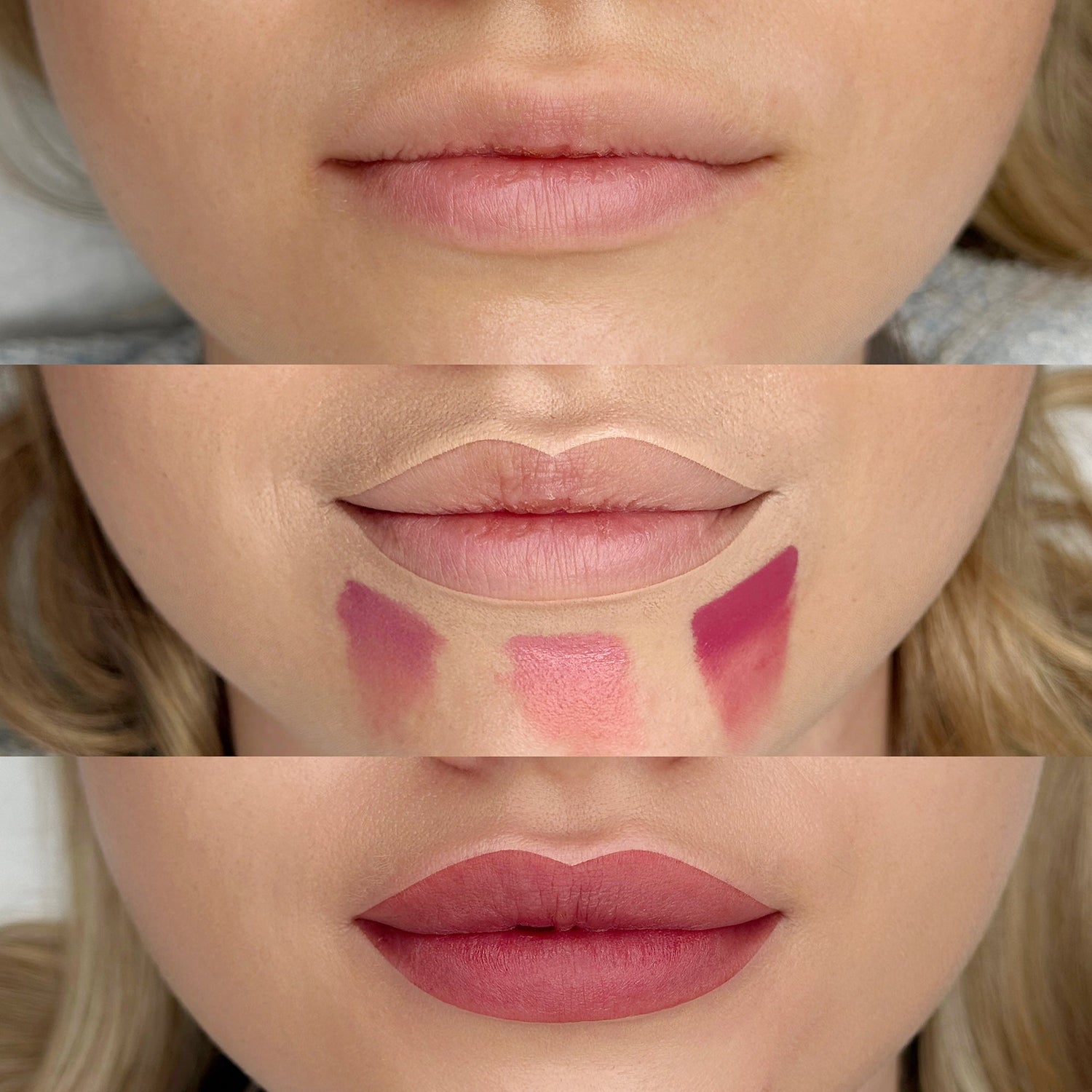
Why Does a PMU Lip Pigment Look Different in the Bottle Than on the Lips?
One of the biggest misconceptions in permanent makeup is the belief that the color you see in the bottle is the color you will see on the lips.
If that were true, choosing a lip pigment would be simple — but PMU pigments do not work like paint, lipstick, or nail polish.
Once implanted into living tissue, their appearance is influenced by many different factors, which is why a pigment that looks red, beige, peach, or dusty pink in the bottle can look surprisingly vibrant immediately after the procedure and beautifully natural once healed.
A Pigment Is Never Viewed in Isolation
When you look at a bottle of pigment, you are observing a concentrated formulation inside a container. Once that pigment is implanted, you are no longer looking at the pigment alone.
Instead, you are seeing the combination of:
- the pigment itself,
- the natural color of the vermilion,
- the optical properties of the skin,
- blood circulation within the tissue,
- and the way light passes through the skin before reaching your eyes.
The pigment has not suddenly become a different color.
It is simply being viewed in a completely different environment.
Living Tissue Changes How We Perceive Color
Unlike lipstick, PMU pigment is implanted beneath the surface of the skin.
Light must first pass through the upper layers of the tissue before it reaches the pigment particles.
It then reflects back through those same layers before reaching our eyes.
During this process, the skin itself influences the color we perceive.
This is one of the reasons why the same pigment can appear different from one client to another.
Natural Lip Color Is Always Part of the Final Result
This is why selecting a pigment is never about covering the lips with a new color. Instead, it is about working with the color that is already there.
The Same Pigment Can Produce Different Healed Results
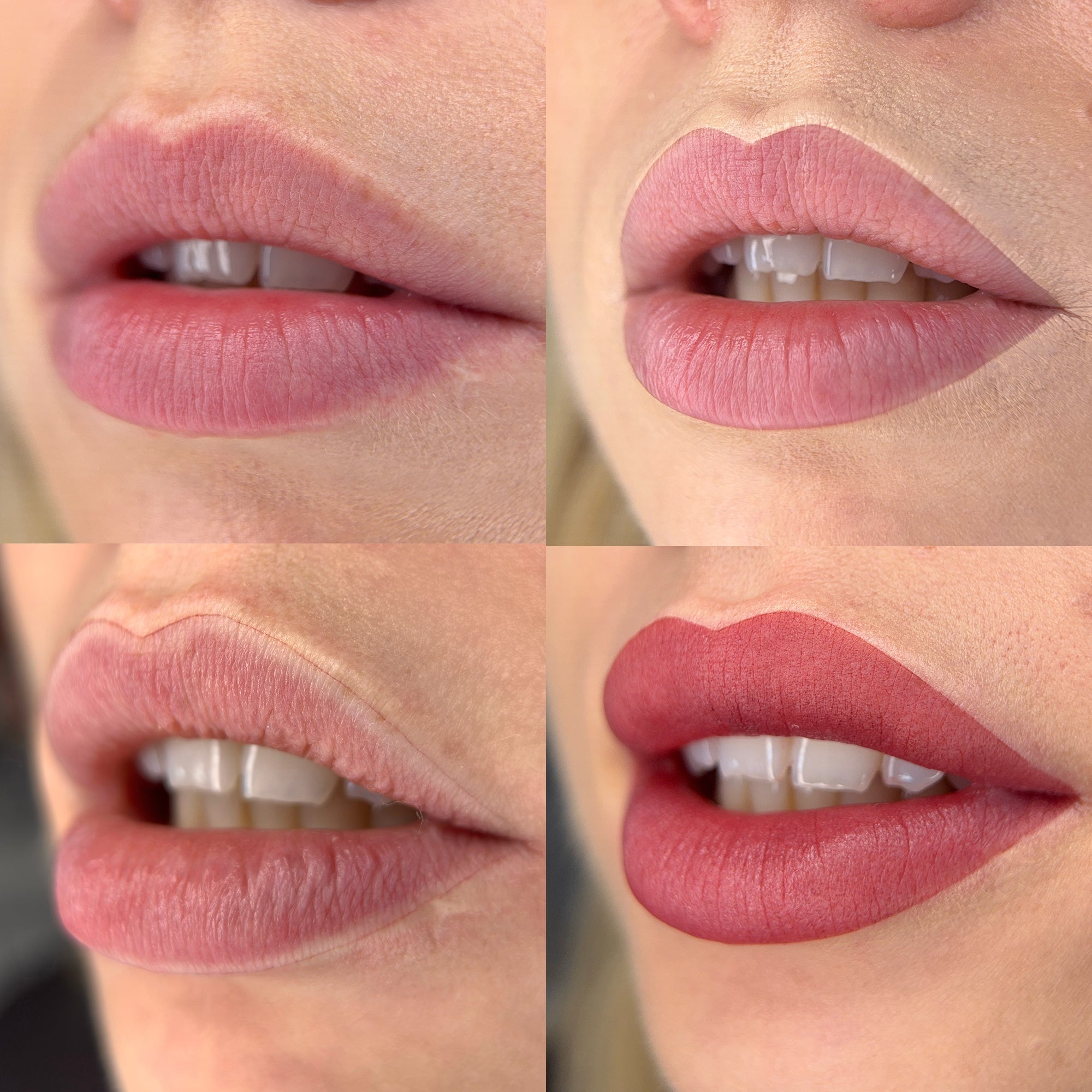
It is common for artists to ask why the same pigment healed beautifully on one client but looked different on another.
In most cases, the pigment itself is not the reason. The difference lies in the tissue (technique, of course, also plays an incredibly important role — but in this article we're focusing on the pigment).
Skin tone, natural lip color, transparency of the pigment, implantation technique, and the biological healing response all contribute to the final appearance.
The pigment remains the same.
The environment changes.
Looking Beyond the Color Label
But learn to read that label too. It's essential to know the ingredients and their chemical and physical properties, and to use that knowledge to predict what you can potentially expect.
Many artists choose pigments based primarily on the shade they see in the bottle or in a swatch on paper. Experienced artists think differently.
Instead of asking:
"What color is this pigment?"
they ask:
"How will this pigment — and its composition — interact with my client's natural lips?"
Understanding this difference is one of the most important steps in mastering lip pigmentation.
It shifts the focus from choosing a color to designing a healed result.
Conclusion
A PMU pigment does not change its identity after implantation.
What changes is the environment in which we observe it.
Living tissue, natural lip color, transparency, blood circulation, and the optical properties of the skin all influence how we perceive the final color.
This is why choosing a pigment is far more complex than selecting a lipstick shade.
The most experienced artists are not simply choosing colors.
They are predicting how those colors will behave inside living tissue.

Leave a comment
All comments are moderated before being published.
This site is protected by hCaptcha and the hCaptcha Privacy Policy and Terms of Service apply.