
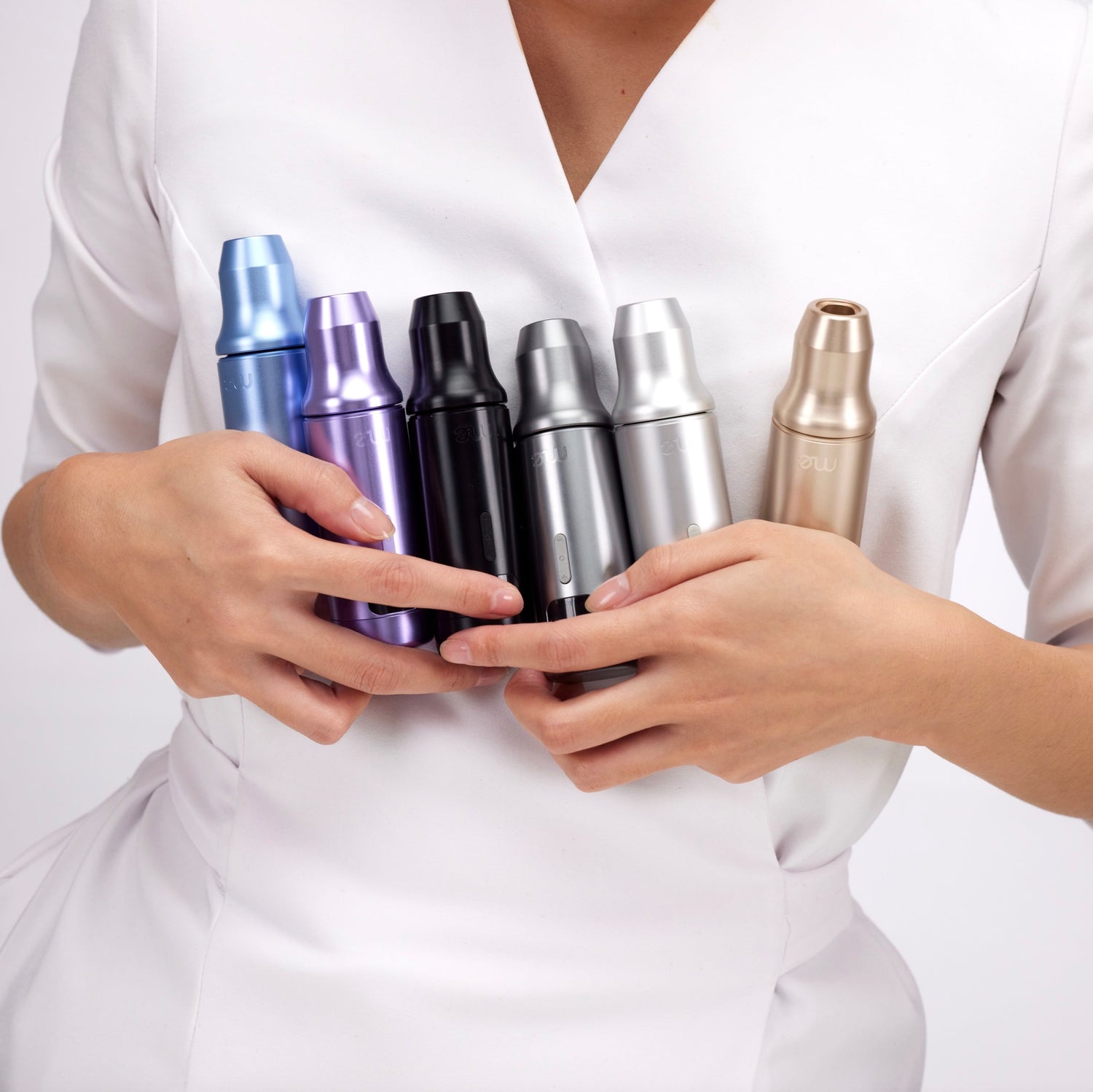
Why the Motor Matters in a Permanent Makeup Machine
When artists compare permanent makeup machines, they often focus on stroke length, operating frequency, voltage or external design.
These specifications matter, but they do not explain how effectively a machine performs under real working conditions. At the foundation of every drive system is the component responsible for converting electrical energy into mechanical motion: the motor.
Every needle cycle begins with the motor. The eccentric mechanism, bearings, drive shaft, pusher and cartridge then transmit, convert and influence that motion. The firmware determines how the motor is controlled and how the system responds when working conditions change.
This means that the motor cannot be evaluated in isolation. However, its quality establishes the performance potential of the entire drive system.
The Motor Is Where Needle Movement Begins
A permanent makeup machine is an energy-transfer system.
The motor produces rotational motion. The drive mechanism converts that rotation into the reciprocating movement required to move the needle. Every needle cycle delivered to the skin begins with this process.
The quality and stability of the drive system influence:
- the smoothness of needle movement,
- the level of unwanted vibration,
- the consistency of successive needle cycles,
- the system’s response to changing tissue resistance,
- and the efficiency with which mechanical energy reaches the cartridge and needle.
The motor creates the foundation, but the final behaviour of the needle depends on how effectively the complete system controls and transfers its output.
Torque and Stability Under Load
Pigmentation does not take place under constant mechanical conditions.
Tissue resistance changes depending on anatomical area, elasticity, hydration, fibrosis, scar tissue, skin thickness, stretching and cartridge configuration. As the resistance acting on the needle changes, the load placed on the drive system changes as well.
If the motor and its control system cannot respond effectively, operating speed may decrease and successive needle cycles may become less consistent. The artist may experience this as hesitation, reduced responsiveness or a loss of control and may instinctively compensate with greater pressure, slower hand movement or additional passes.
A well-designed motor system provides sufficient torque and responsive control under load, helping the machine maintain more stable operating behaviour as tissue resistance changes.
This does not replace correct technique. It gives the artist a more consistent mechanical foundation on which that technique can be applied.
Motor Control Matters as Much as Motor Quality
A high-quality motor alone does not guarantee high-quality machine performance.
Its behaviour depends on the electronics, feedback signals, control algorithm and mechanical system surrounding it. Even an advanced motor will not reach its full potential if the control system cannot regulate it accurately.
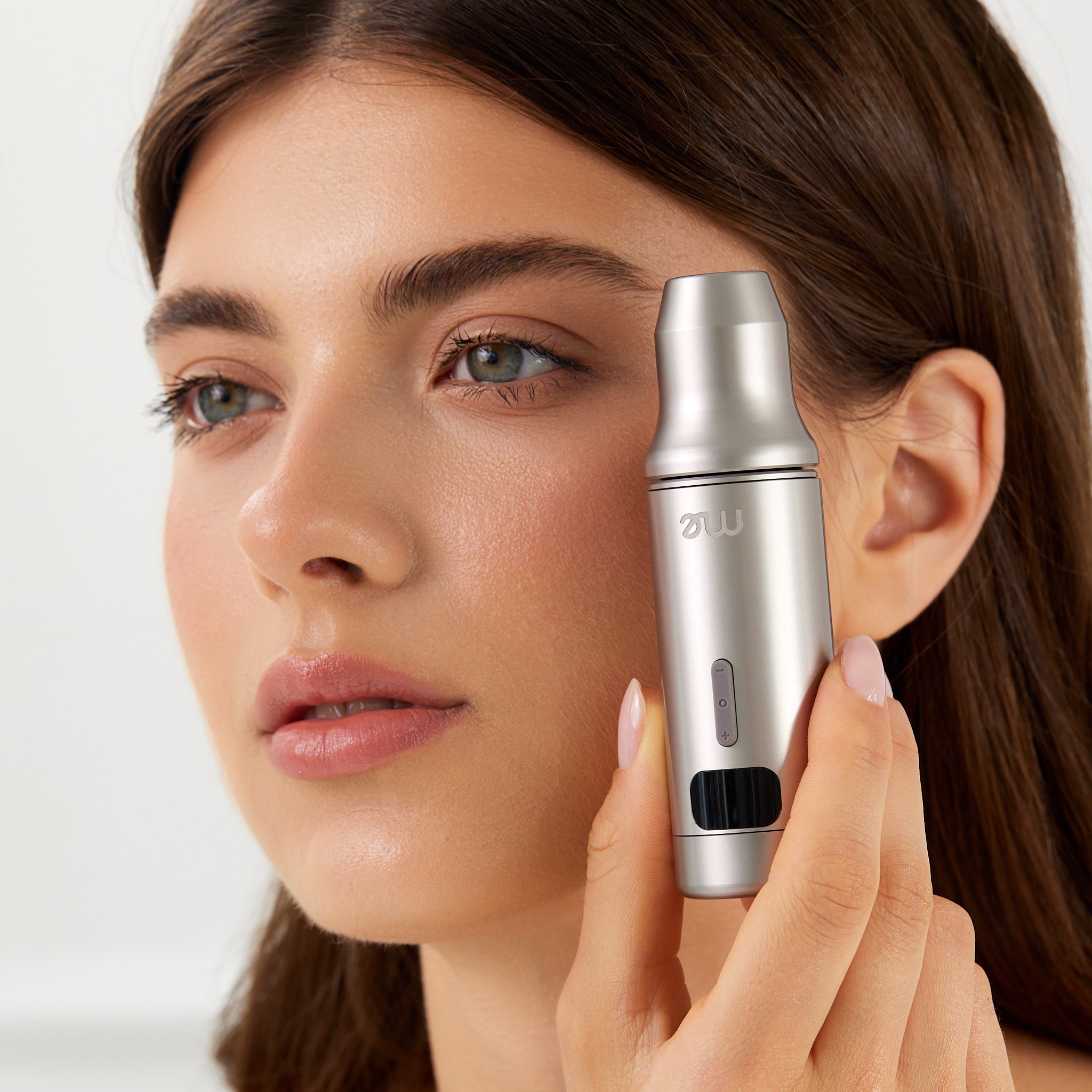
The ME™ device combines a FAULHABER brushless motor with a custom-developed closed-loop control system. The controller continuously monitors motor operation and adjusts power delivery in response to changing load.
Instead of relying on a fixed electrical input and allowing the motor speed to fluctuate freely, the system actively compensates when resistance changes. This helps maintain more stable operating speed and more consistent drive behaviour throughout the procedure.
For the artist, the result is a machine that feels responsive, controlled and predictable, without requiring constant compensation as working conditions change.
Precision Requires Mechanical Balance
Electrical performance is only one part of the equation.
Rotor balance, bearing quality, shaft concentricity, alignment, internal clearances and manufacturing tolerances all influence the behaviour of the drive system.
Even small mechanical irregularities can produce oscillations that travel through the mechanism and into the handpiece. These vibrations may affect perceived stability, increase noise and contribute to hand fatigue during longer procedures.
A precisely manufactured and correctly balanced system reduces unnecessary vibration and allows the intended movement to be transferred more cleanly through the mechanism.
This is why motor quality must always be considered together with the quality and alignment of the components surrounding it.
Efficient Energy Transfer
Producing mechanical output is not enough. What matters is how effectively that output is transferred to the needle.
Energy can be lost through friction, vibration, component deformation, misalignment and excessive internal play. These losses do not contribute to useful needle movement. Instead, they may appear as heat, noise, vibration or mechanical instability.
A precisely engineered drive system reduces these losses, allowing a greater proportion of the motor’s output to be converted into controlled reciprocating movement.
For the artist, efficient energy transfer means a clearer and more consistent response from the machine. For the tissue, it can support a more controlled procedure by reducing the artist’s need to compensate with excessive pressure or repeated passes.
However, tissue trauma and pigment retention remain dependent on multiple factors, including technique, needle configuration, pigment, skin condition and aftercare.
Long-Term Performance Stability
Conventional brushed DC motors use brushes that remain in physical contact with the commutator. These components gradually wear during operation, which can affect efficiency and operating characteristics over time.
Brushless motors use electronic commutation and therefore eliminate brush wear. When correctly designed and operated within their intended parameters, they can offer longer service life and more stable long-term performance.
This does not make the complete machine maintenance-free. Bearings, sleeves and other moving or friction-loaded components remain subject to mechanical wear and require periodic inspection or replacement.
For professional artists, performance consistency over thousands of working cycles is just as important as how the machine performs when it is new.
Why Artists Feel the Difference
Artists do not interact directly with the motor. They experience the combined behaviour of the motor, control system, mechanism, cartridge and needle.
They feel:
Smoothness.
Responsiveness.
Stability.
Vibration.
Control.
The difference between a powerful motor and a well-engineered drive system is important. More power alone does not automatically create better pigmentation. What matters is whether the system can convert and regulate that power into stable, repeatable and controlled needle movement.
When the complete system operates consistently, the artist can focus more closely on hand movement, speed, stretching and tissue response instead of continuously compensating for changes in machine behaviour.
Conclusion
The motor is far more than the component that makes the needle move. It is the starting point of every mechanical cycle produced by the device.
Its torque, balance, responsiveness and long-term stability establish the performance potential of the machine. However, that potential can only be realised through precise mechanical engineering and an effective control system.
Stroke length, operating frequency, motor control, mechanical tolerances and cartridge interaction all influence the final behaviour of the needle. None of them should be considered in isolation.
This is why the ME™ device was engineered around a FAULHABER brushless motor integrated with a custom-developed closed-loop control system and a precisely matched mechanical drive.
The objective was not simply to create a machine with impressive specifications. It was to build a complete system capable of delivering stable, repeatable and precisely controlled needle behaviour under real treatment conditions.


Leave a comment
All comments are moderated before being published.
This site is protected by hCaptcha and the hCaptcha Privacy Policy and Terms of Service apply.